
Supply and fit · Ireland
Radiator Replacement in Ireland: Cost, Types and Fitting
Swapping a cold or leaking radiator, upgrading to a designer or column model, or adding a heated towel rail, with county guidance on what it costs, which radiator suits your room, what the job involves, and how to choose a plumber.
The short version
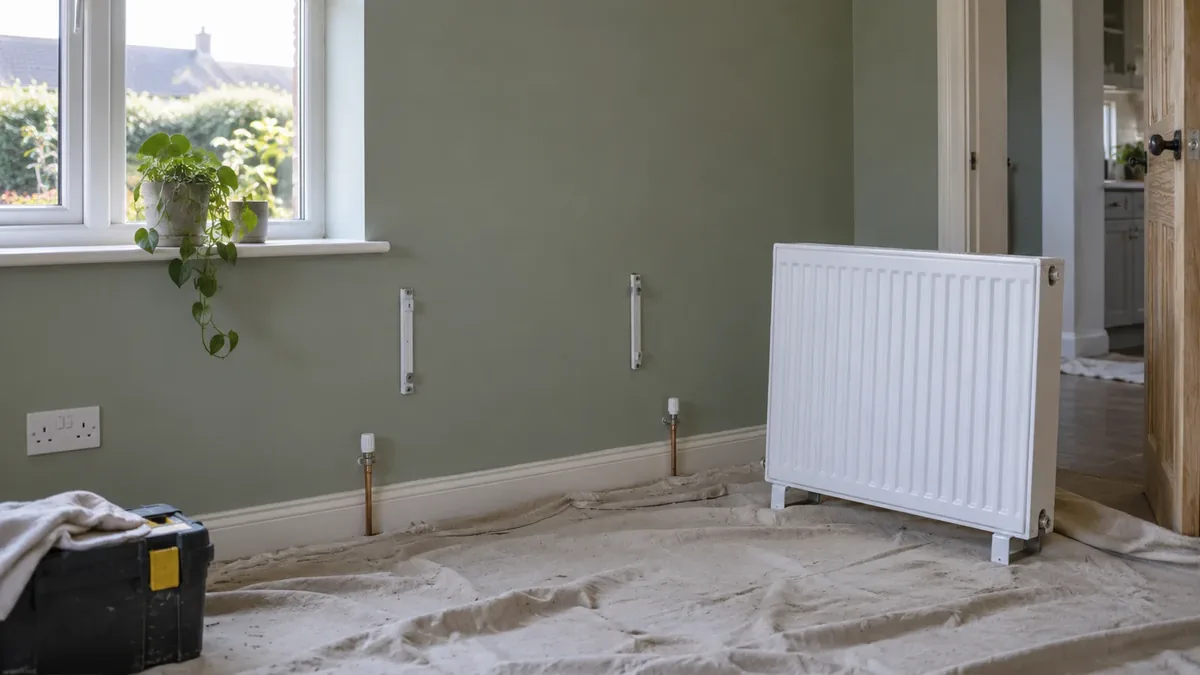
Radiator replacement in Ireland costs €150 to €350 for a single radiator supplied and fitted in 2026, rising to €300 to €700 for a designer or column radiator. Most swaps are a same-day job, and the plumber will balance and bleed the system so every room heats evenly. Choose your county below for local prices and plumbers, or read on for the radiator types, the 2026 costs, and what the job involves.
Whether you are replacing a rusty radiator in a Dublin terrace, adding a heated towel rail to a bathroom, or fitting a tall column radiator in a hallway, three things decide the job: the radiator size the room needs, whether you are swapping like-for-like or moving the rad, and who you hire. Get those right and a replacement is a clean, tidy job with the heating back on the same day.
Getting it right
Sizing a Radiator to the Room
A radiator that is too small will never warm the room, no matter how long the heating runs, while one that is too big wastes energy and money. The right size depends on the room, the number of outside walls, the window area and how well the room is insulated.
A good plumber works this out before quoting, in place of simply matching the old radiator. A modern double-panel radiator often puts out far more heat than an older single panel of the same size, so an upgrade can mean a smaller, tidier radiator that heats the room better.
- Room size, windows and insulation set the heat output needed
- Double-panel radiators heat far better than old single panels
- The right size warms the room without wasting energy
When to replace
Signs You Need to Replace a Radiator
A radiator does not always fail outright. Cold patches, rust and slow heating usually mean sludge has built up or the radiator is near the end of its life. These are the signs Irish plumbers see most before a replacement.
Cold at the Bottom
Warm at the top and cold along the bottom is the classic sign of sludge sitting inside, so the radiator no longer heats the room properly.
Rusty or Leaking
Rust streaks, damp patches or drips at the valves or seams point to a corroded radiator that is safer to replace than to patch.
Never Gets Hot
A radiator that stays cold while the rest heat up usually has a stuck valve or a blockage, and often needs replacing on an older system.
Banging and Gurgling
Knocking, banging or gurgling when the heating fires up points to trapped air or sludge moving through a tired radiator.
Old Steel Radiators
Older single-panel steel radiators put out far less heat than a modern double-panel model of the same size, so an upgrade cuts running costs.
Room Slow to Heat
A room that takes far longer to warm than the rest of the house often has an undersized or clogged radiator that a replacement will fix.
The options
Radiator Types for Irish Homes
Panel, column, designer or heated towel rail: each suits a different room and carries a different fitted price. Here is what sets them apart before you get a quote.
Panel Radiator
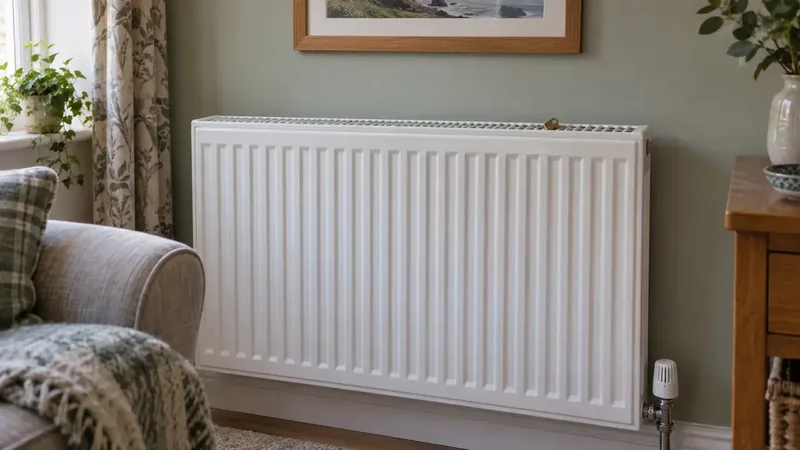
The standard steel radiator in most Irish homes, in single or double panel with added convector fins for more heat. Cheap, efficient and easy to source, and a like-for-like swap is usually a same-day job.
from€150
Column Radiator
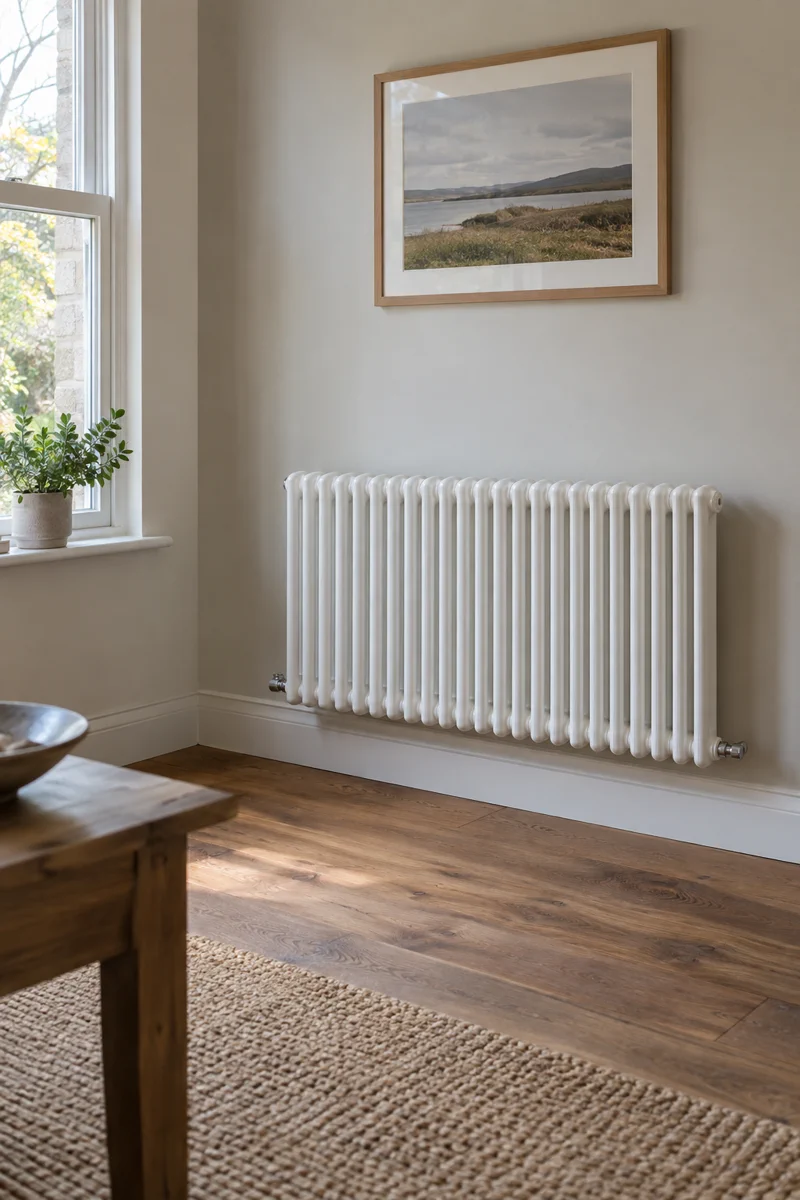
Tall vertical or classic horizontal columns that suit hallways and rooms short on wall space. They hold more water and give a period look, and pair well with older homes and high ceilings.
from€300
Designer Radiator
Flat-panel, mirrored or feature radiators chosen for the look as much as the heat. Prices vary widely by finish and brand, so confirm the model on your quote before you commit.
from€350
Heated Towel Rail
A ladder-style rail for bathrooms and en-suites that warms towels and takes the chill off the room. Can run off the heating, off electric, or both on a dual-fuel model.
from€200
2026 prices
How Much Does Radiator Replacement Cost in Ireland?
Radiator replacement in Ireland costs €150 to €350 for a single panel radiator supplied and fitted in 2026, with labour and VAT included. A like-for-like swap sits at the low end, while a designer or column radiator, or adding a new radiator with fresh pipework, sits higher.
- Get the radiator model named on every written quote
- A like-for-like swap is far cheaper than moving a rad
- Fitting several radiators together lowers the price each
Every home is different. Your plumber will price the job on the radiator, the pipework and your county, so treat the figures on the right as a budgeting guide, not a quote.
- Single radiator, supply and fit €150–350
- Designer or column radiator €300–700
- Heated towel rail €200–450
- Add a radiator with pipework €250–500
- Fit a thermostatic valve (TRV) €40–90
- System balance and bleed Included
Indicative ranges only. Always confirm with a written quote.
What Affects the Price of a New Radiator
Like-for-Like or Moving
Swapping a radiator on the same brackets and pipes is quick. Moving it to another wall means new pipework and adds labour and materials.
Radiator Type and Size
A plain panel radiator is far cheaper than a designer or column model, and a larger radiator for a bigger room costs more to supply.
System Draindown
Some jobs need the system partly drained and refilled, which adds time, especially where old valves have seized and need replacing too.
Number of Radiators
Replacing several radiators in one visit spreads the call-out and draindown across the job, so the price per radiator comes down.
The two jobs
Swapping Like-for-Like vs Moving a Rad
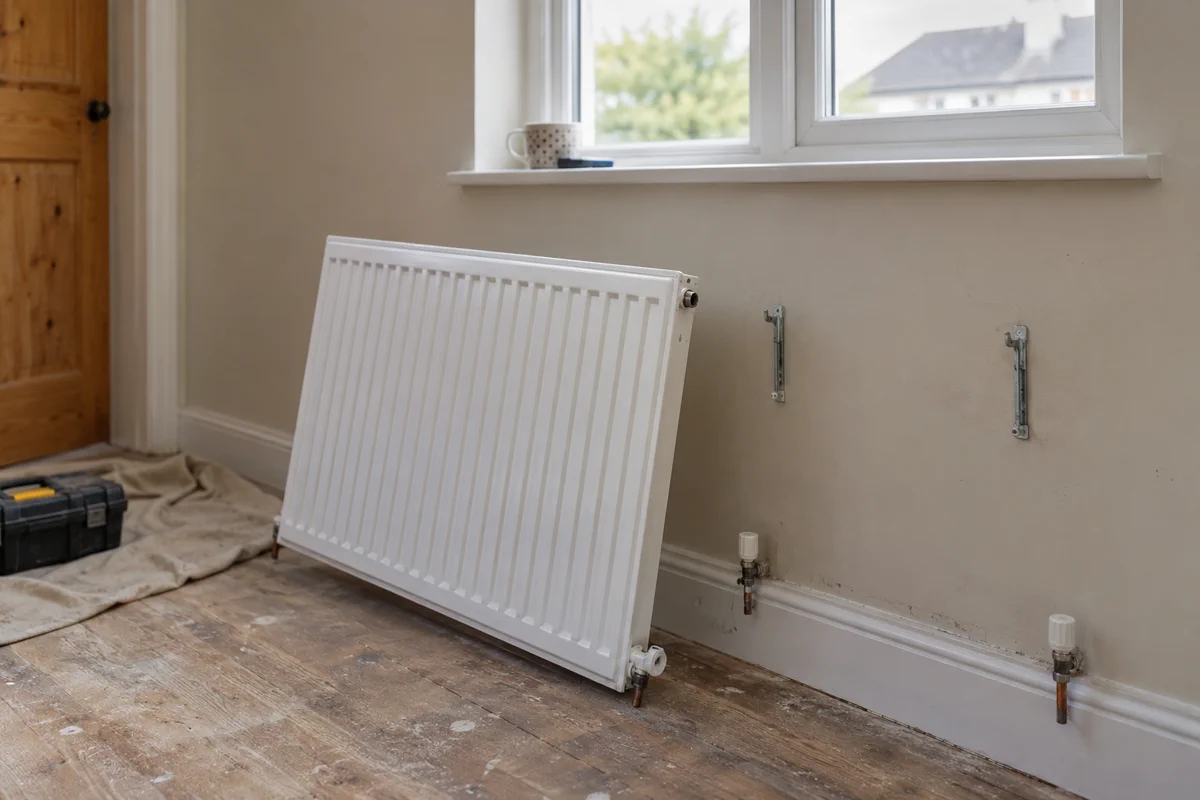
The cheapest, quickest replacement is a like-for-like swap: the new radiator hangs on the same brackets and connects to the same pipes, so there is no pipework to alter and the heating is back on the same day.
Moving a radiator to another wall, or fitting a taller vertical model where a horizontal one used to be, means rerouting pipework and often lifting a floorboard or two. It is a bigger job with more labour, so it is worth deciding early which one you actually need.
- Like-for-like reuses the existing brackets and pipework
- Moving a rad means new pipework and more labour
- Decide early, as it changes the price and the time on site
On the day
How a Radiator Replacement Works
A like-for-like radiator swap is usually a same-day job. Here is how a plumber works through it, from isolating the radiator to balancing the system so every room heats evenly.
Isolate and Drain the Radiator
The plumber shuts the valves at each end and drains the old radiator down into a container, keeping the rest of the system intact where possible.
Remove the Old Radiator
The old radiator is lifted off its brackets and taken away, and the wall and pipework are checked before the new unit goes up.
Mount the New Radiator
New brackets are fixed and levelled, the radiator is hung, and the tails and valves are connected to the existing pipework.
Fit or Reuse the Valves
A thermostatic valve is fitted where wanted, so the room can be set to its own temperature and the radiator turns itself down once warm.
Refill, Bleed and Test
The system is refilled, the radiator bled of air, and every joint checked under pressure for leaks before the heating is turned back on.
Balance the System
The plumber balances the flow across the radiators so the far rooms heat as well as the near ones, then confirms the whole system is warming evenly.
The finishing step
Balancing the System so Every Room Heats
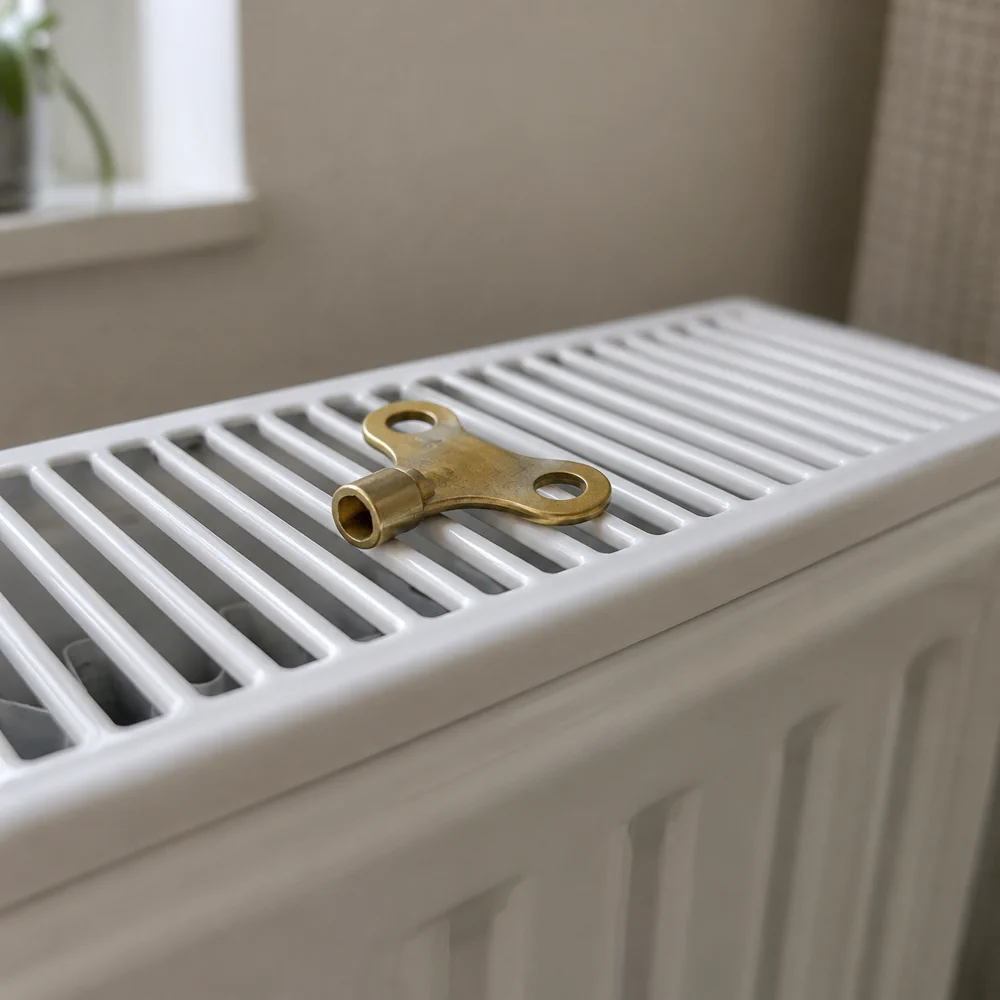
Fitting the radiator is only half the job. Once it is on and filled, the plumber balances the system, adjusting the flow at each radiator so the ones furthest from the boiler heat as well as the ones nearest to it.
Without balancing, a new radiator can pull heat away from the rest of the house, leaving far rooms cold. A proper replacement always ends with a bleed and a balance, so the whole system warms evenly and the boiler runs efficiently.
- Balancing evens the flow so far rooms heat as well as near ones
- An unbalanced system leaves rooms cold after a swap
- Every good replacement ends with a bleed and a balance
Hiring
How to Choose a Plumber for Radiators
A radiator swap is a common plumbing job, but a good plumber prices it clearly and leaves the system balanced. Here is what to look for before you book.
Get an Itemised Quote
The quote should name the radiator model, the valves and the labour, and say whether balancing and bleeding are included. A vague price often hides extras.
Ask About Balancing
A radiator swap is only finished when the system is balanced so every room heats evenly. Confirm the plumber includes this rather than just hanging the rad.
Check Insurance and Reviews
Look for a plumber with public liability cover and local reviews. Every plumber listed here works in your county, so you can check them before you call.
Agree the Scope in Writing
Confirm whether you are staying like-for-like or moving the radiator, and whether old seized valves are being replaced, so there are no surprises on the bill.
Local coverage
Radiator Replacement by County in Ireland
What you pay and how fast a plumber can reach you comes down to where you live. Choose your county for local 2026 prices and plumbers who fit and replace radiators.
Leinster
12 countiesFrom older Dublin terraces swapping rusty panel radiators to newer homes across the Meath, Kildare and Wicklow commuter belt fitting column and designer radiators, Leinster has plumbers covering every kind of replacement.
Munster
6 countiesCork, Limerick and Waterford cities have plenty of plumbers for a same-day swap, while rural Kerry, Clare and west Cork homes with older heating systems often need a balance and bleed alongside the replacement.
Connacht
5 countiesOlder rural homes across Galway, Mayo, Sligo and Roscommon, exposed to Atlantic weather, put a heavy load on radiators, so upgrades from single-panel to double-panel radiators are common work here.
Common questions
Radiator Replacement Questions From Irish Homeowners
How much does it cost to replace a radiator in Ireland in 2026?
A single panel radiator supplied and fitted costs €150 to €350 in 2026, including labour and VAT. A designer or column radiator runs €300 to €700, and a heated towel rail €200 to €450. A like-for-like swap on the same pipework sits at the low end.
How long does it take to replace a radiator?
A like-for-like radiator swap is usually a same-day job, often done in an hour or two once the plumber is on site. Moving a radiator to another wall, or fitting several radiators, takes longer because of the extra pipework and draindown.
How much does it cost to add a new radiator with pipework?
Adding a new radiator where there was none, including running fresh pipework, costs €250 to €500 in Ireland in 2026. The final price depends on how far the new radiator is from the existing pipes and whether a floor needs lifting to route them.
What is a thermostatic radiator valve and do I need one?
A thermostatic radiator valve, or TRV, lets each radiator turn itself down once the room reaches the set temperature, which saves energy and gives you room-by-room control. Fitting one costs €40 to €90, and plumbers often add them during a replacement.
Why is my radiator cold at the bottom but warm at the top?
Warm at the top and cold at the bottom is a sign of sludge, a build-up of rust and debris, sitting inside the radiator. A power flush or chemical clean can clear it, but on an older, corroded radiator a replacement is often the better value fix.
Do I need to replace all my radiators at once?
No. You can replace radiators one at a time as they fail. That said, if several are old and rusty, replacing them together in one visit spreads the call-out and the system draindown across the job, so the cost per radiator comes down.
Will the plumber balance the system after fitting a new radiator?
A good plumber will bleed and balance the system after a replacement, adjusting the flow so every room heats evenly and the far radiators warm as well as the near ones. Confirm balancing is included in the quote, as it is what finishes the job properly.
Can I replace a radiator with a heated towel rail?
Yes. A heated towel rail can replace a bathroom radiator, running off the heating system, off electric, or both on a dual-fuel model. Sizing matters, as a small towel rail may not put out enough heat for a larger bathroom, so ask the plumber to check.
Find a Plumber for Radiator Replacement
Radiator replacement quotes from plumbers in every county. Contact them directly, no fees, no sign-up.
Browse plumbers by county