Do You Need a Water Softener?
Whether a softener is worth the money comes down to how hard your water actually is, and that depends on where you live and your supply. Hard water is water high in dissolved calcium and magnesium, picked up as it passes through limestone. You cannot always taste it, but you can usually see it.
Hard water in Ireland
Much of the east and the midlands sits on limestone, so hard water is common from Dublin and Kildare through Meath, Offaly and Laois. Hardness varies across Munster, with harder supplies over the limestone lowlands of Limerick and Tipperary and softer water off the older rock in parts of Cork and Kerry. Water tends to be softer over the west of Galway and Mayo, while the limestone country of east Galway and Roscommon can run hard. Across Cavan, Monaghan and Donegal hardness swings with the local geology and the source.
The signs to look for
A chalky white crust on taps and inside the kettle is the clearest sign, and it builds back within days of cleaning on a hard supply. Blocked showerhead nozzles, cloudy glassware from the dishwasher, more soap and shampoo needed to lather, and scale coating the elements in washing machines and immersions all point the same way.
If several of those sound familiar, a softener is worth pricing. Ask a plumber to test your hardness first, or check with Uisce Eireann for your area, so the unit is sized to your actual water. For local prices and fitters, see water softener installation.
How a Water Softener Works
A true water softener does not just hide hardness, it removes it. Understanding the method helps you compare the three types you will be quoted.
Salt-based ion exchange
Water passes through a bed of resin beads that swap the dissolved calcium and magnesium for sodium. Once the resin fills up, it is flushed clean with a brine made from softener salt, a process called regeneration, and the cycle starts again. This is the only method that genuinely removes hardness from the water.
Twin-tank continuous supply
A twin-tank softener uses two resin tanks so one is always softening while the other regenerates. That gives a continuous supply of soft water with no downtime, which suits larger homes and higher demand.
Electronic descalers
An electronic or electric descaler wraps a coil around the incoming pipe and alters how scale forms, so it is less likely to stick. It removes no minerals, so the water is not truly softened, but it needs no salt and no plumbing changes.
Water Softener Types Compared
Salt-based, twin-tank and electronic units treat hard water in very different ways, at very different prices. Here is what sets them apart before you get a quote.
| Type | From | Best for | How it works |
|---|---|---|---|
| Salt-based ion-exchange | €600 | Most homes, real softening | Resin swaps minerals for sodium |
| Twin-tank | €900 | Larger homes, no downtime | Two tanks, always-on supply |
| Electronic descaler | €150 | Renters, tight budgets | Alters scale, no salt needed |
| Compact single-tank | €600 | Apartments, small spaces | Resin and brine in one cabinet |
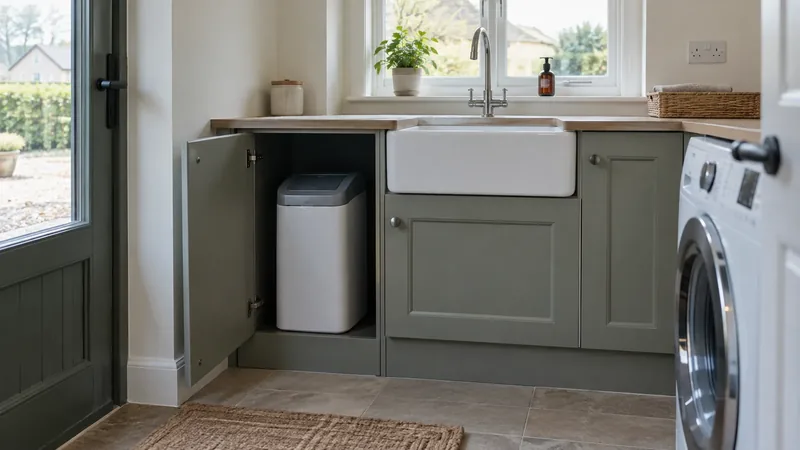
The salt-based ion-exchange unit is the standard choice in Irish homes and the only type that genuinely removes hardness. A compact single-tank unit puts the resin and brine tank in one cabinet built to fit under a sink or in a tight utility space, a good fit where a full twin-tank will not go.
Installation and Where It Sits
A softener is a plumbing job, so it is fitted by a plumber. A standard salt-based unit is usually a half-day job, while an electronic descaler that clips onto the pipe can be fitted in under an hour, as it needs no cutting into the supply.
Where a softener goes
A softener is fitted on the rising main, just after the stopcock and before the water branches to the rest of the house. It needs a mains connection, a drain and a nearby power point, so it most often sits under the kitchen sink or in a utility room, garage or hot press.
What happens on the day
- Find the fitting point. The plumber locates the rising main after the stopcock and checks there is a mains connection, a drain and a power point close enough for the unit.
- Isolate and cut in. The water is turned off at the stopcock and the pipe is cut to tee the softener into the incoming supply.
- Fit a bypass valve. A bypass lets the softener be isolated for servicing or a holiday without cutting off water to the house.
- Keep a hard tap. Where wanted, the kitchen cold tap is teed off ahead of the softener so you still have a hard supply for drinking and cooking.
- Connect drain and power. The regeneration drain hose is run to a suitable waste point and the unit is powered up and programmed for your water hardness.
- Commission and test. The plumber charges the brine tank with salt, runs the first regeneration, checks for leaks and confirms the water is running soft.
Running Costs and Salt
Once fitted, a salt-based softener costs little to keep going. The main running cost is softener salt, usually €60 to €120 a year for a typical household, plus a small amount of water and power used during regeneration. The unit tops itself up automatically during regeneration, so you simply keep the brine tank stocked with salt blocks or tablets.
Servicing and lifespan
Most units run for well over a decade with only occasional servicing. A service or resin re-bed typically runs €80 to €150. Ask what ongoing care the unit needs, and whether an annual service is required to keep the warranty valid, before you commit.
Is softened water safe to drink?
Softened water is generally fine for most people, though it carries a little added sodium from the softening process. Many homes keep the kitchen cold tap on a hard, unsoftened supply for drinking and cooking, which your plumber can plumb in during the install. For related jobs, see our immersion heater guide and hot water cylinder guide.
What a Water Softener Costs in 2026
A salt-based water softener costs €600 to €1,200 supplied and fitted in Ireland in 2026, labour and VAT included. Twin-tank units sit higher, while an electronic or electric descaler is a cheaper €150 to €400. The unit itself is most of the price, so it pays to compare like for like. Always get at least two written quotes, each naming the softener model.
| Job | Typical cost | Notes |
|---|---|---|
| Salt-based softener, supply and fit | €600–1,200 | The standard true softener |
| Twin-tank softener, supply and fit | €900–1,500 | Continuous, always-on supply |
| Electronic or electric descaler | €150–400 | No salt or plumbing changes |
| Fit only, you supply the unit | €250–450 | Labour only |
| Softener salt, per year | €60–120 | Ongoing running cost |
| Service or resin re-bed | €80–150 | Occasional upkeep |
Indicative ranges only, so treat them as a budgeting guide, not a quote. A drain and mains point nearby keeps the fitting cost down, while extra pipework, a bypass or a hard-tap tee-off add labour. For a full overview of plumbing prices, see our plumbing costs guide.
Key takeaways
- Hard water is common across the limestone belt of the east and midlands, from Dublin and Kildare through Meath, Offaly and Laois. A quick hardness test settles whether your home would benefit.
- A salt-based ion-exchange unit is the only type that genuinely removes hardness. Twin-tank units give an always-on supply, while an electronic descaler only alters how scale forms.
- A salt-based softener costs €600 to €1,200 supplied and fitted in 2026, labour and VAT included. An electronic descaler is a cheaper €150 to €400.
- Budget €60 to €120 a year for softener salt. Most units run for well over a decade with only occasional servicing.
- Fitting a standard salt-based softener is usually a half-day job for a plumber, teed into the rising main after the stopcock.