
Repair guide
Leaking Radiator Repair Across Ireland
Valve leaks, pinhole corrosion, or a full radiator replacement. Local plumbers across all 26 counties, available fast.
Leaking radiator
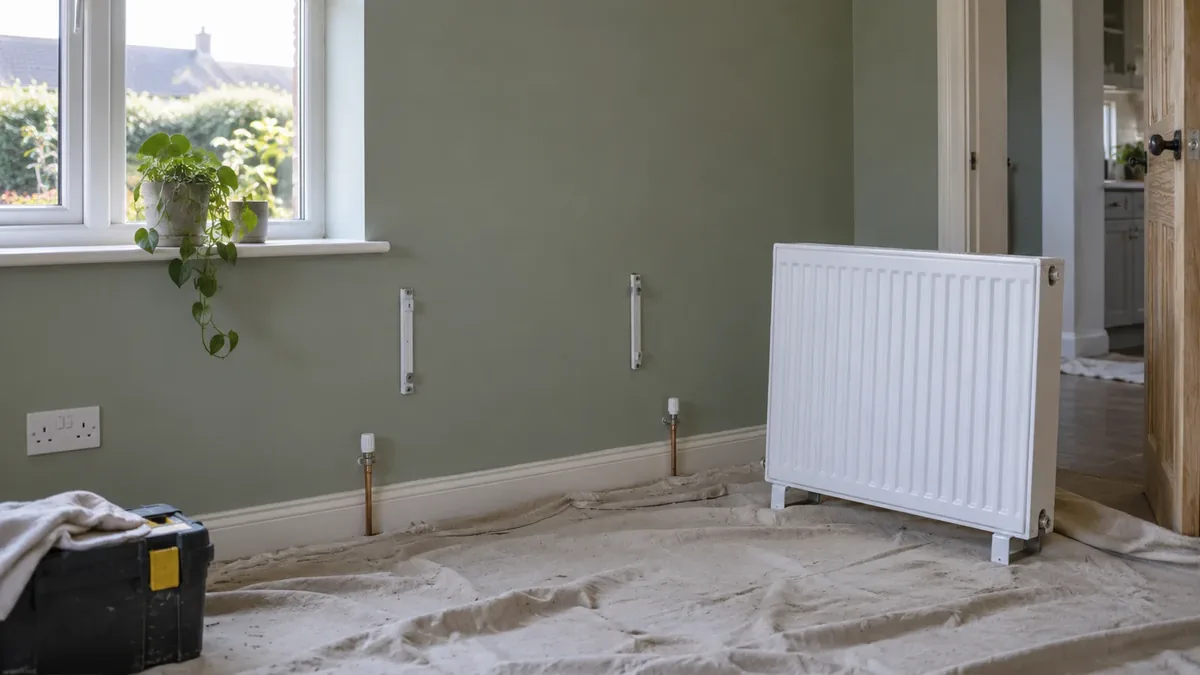
In most cases a leaking radiator is coming from a valve rather than the panel itself, which makes it a straightforward and relatively inexpensive repair. Left unattended, though, a leak can damage floors, ceilings and joists.
Pinhole leaks in the panel are different, as they point to corrosion inside the system and often mean the radiator needs replacing. Catching a valve leak early usually means a quick gland or valve repair rather than lifting flooring to deal with water damage later. Our directory lists local plumbers across all 26 counties who can respond quickly to a leaking radiator.
Where it leaks
Leaking Radiator: Where to Look
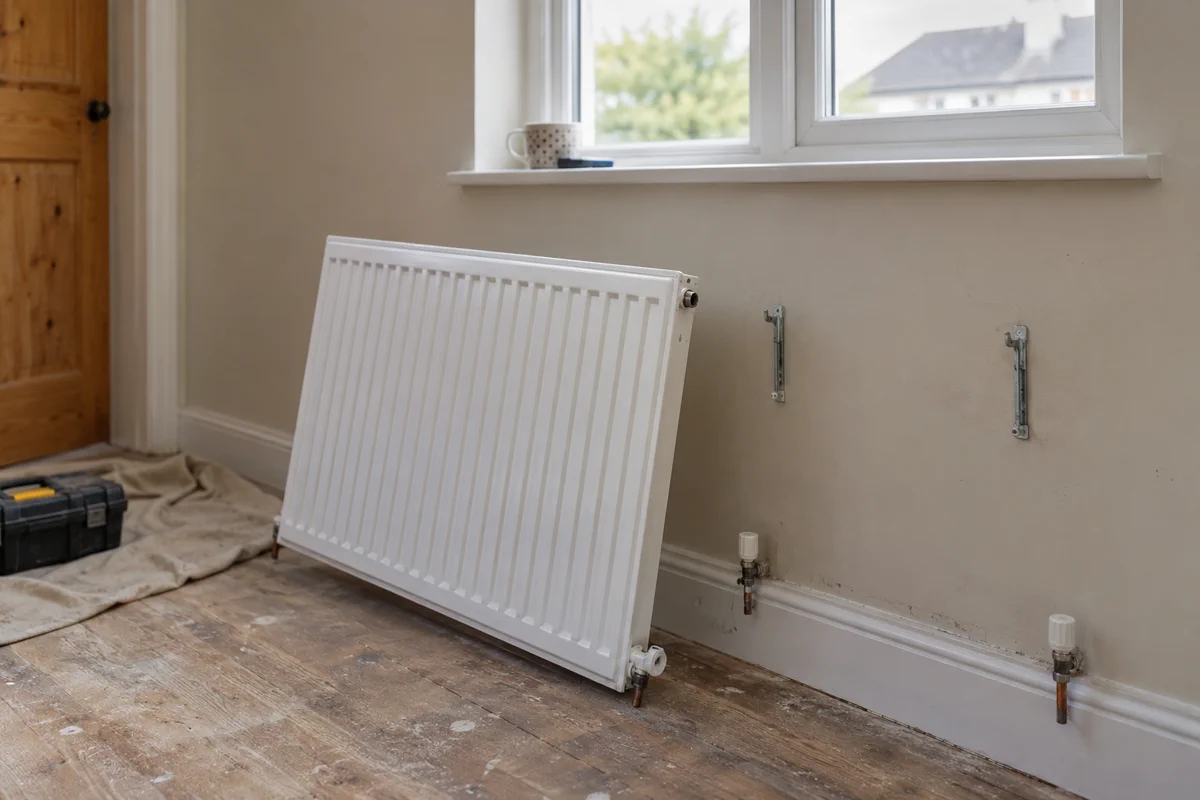
A leaking radiator can cause significant damage to floors, ceilings and joists if it is left unattended, so catch the drip and act quickly. In most cases the leak comes from a valve rather than the radiator panel itself, which makes the repair straightforward and relatively inexpensive.
Closing the valves at each end isolates the radiator so the drip slows while you wait for a plumber. A pinhole in the panel is different, as it points to corrosion inside the system and often means the radiator needs replacing rather than repairing.
- The valve gland where the spindle passes through the valve body
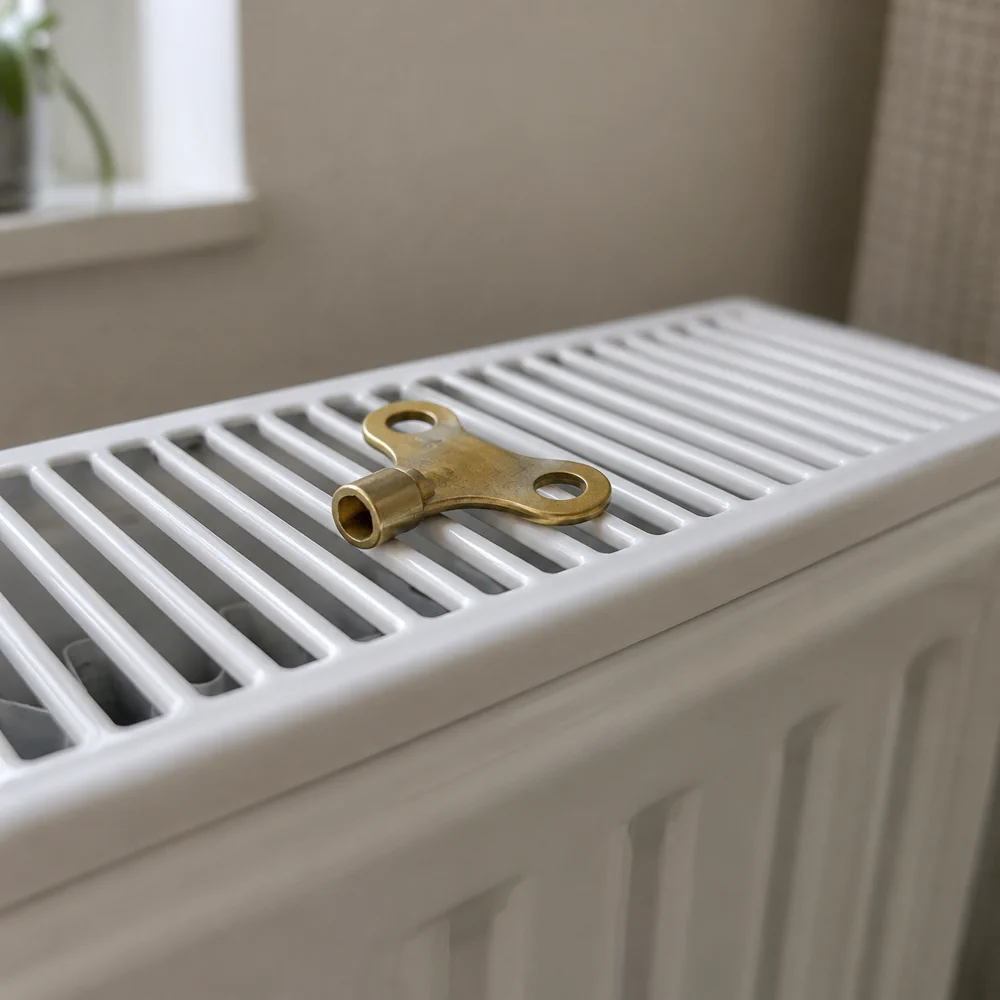
- The bleed valve at the top corner of the radiator
- A pinhole in the radiator panel caused by internal corrosion
- The radiator tail where the valve connects to the panel
- The lockshield valve on the return side of the radiator
- A loose or cracked compression fitting on the pipework below
Why it happens
Common Causes of a Leaking Radiator
Knowing where a radiator gives way helps you tell a quick valve fix from a panel that needs replacing.
Valve Gland Wear
The most common source. Over time the gland where the spindle passes through the valve body loosens and weeps, which is why most leaks come from a valve rather than the panel.
Internal Corrosion
A pinhole in the radiator panel is caused by corrosion inside the system. Low inhibitor levels let rust build up until a weak point in the panel finally gives way.
Loose Fittings
A loose or cracked compression fitting on the pipework below, or a weeping radiator tail, can drip steadily even when the panel and valves are otherwise sound.
Typical costs
What a Leaking Radiator Repair Costs in 2026
Repair costs depend on the source of the leak and whether the radiator panel itself needs replacing. Valve repairs are usually quick and low-cost, while panel replacements take longer but are still a half-day job in most cases.
- Valve repairs are usually quick and low-cost
- A panel replacement is still a half-day job in most cases
- Prices include parts and labour
Larger or double-panel radiators may cost more. Always confirm with the plumber before work begins.
- Valve replacement €80–160
- Bleed valve replacement €60–120
- Radiator swap, 600mm panel €250–450
- Radiator swap, 1,200mm panel €350–600
- Inhibitor top-up €60–100
Prices include parts and labour. Larger or double-panel radiators may cost more.
The repair
How a Radiator Leak Is Repaired
The plumber dries the radiator and surrounding pipework thoroughly, then runs the system to pinpoint whether the leak is from a valve gland, the bleed valve, a panel pinhole or the radiator tail. Using the lockshield and thermostatic valves on either side, they isolate the radiator so it can be worked on without draining the whole heating circuit.
A leaking valve is repacked or replaced. A pinhole in the panel means the radiator is swapped for a new one of the same size, the system is topped up and a leak check is carried out. After any repair, the plumber checks the inhibitor concentration in the system water, as low levels cause ongoing corrosion, and adds a top-up if needed.
Browse by county
Find a Plumber in Your County
Every plumber listed works in your county and is contactable directly for radiator leaks and replacements, county by county across Ireland.
Leinster
12 countiesDublin and the east, where hard water speeds up limescale and corrosion inside radiators and valves.
Munster
6 countiesCork, Limerick and the south west, from city terraces to rural homes on older heating systems.
Connacht
5 countiesGalway, Mayo and the west, where older rural homes put a heavy load on radiators and valves.
Common questions
Leaking Radiator: Common Questions
Where do radiators usually leak from?
In most cases the leak comes from a valve rather than the radiator panel itself, most often the gland where the spindle passes through the valve body. The bleed valve at the top corner, the radiator tail, the lockshield valve and a compression fitting on the pipework below are the other usual sources.
How much does it cost to fix a leaking radiator in Ireland?
Valve repairs are usually quick and low-cost. A valve replacement runs €80 to €160 and a bleed valve replacement €60 to €120, with parts and labour included. If a corroded panel needs replacing, a 600mm radiator is €250 to €450 and a 1,200mm radiator €350 to €600.
Does a leaking radiator mean I need a new one?
Not usually. Most leaks are at a valve and can be repaired straightforwardly. A pinhole in the panel is different, as it points to corrosion inside the system and often means the radiator is best swapped for a new one of the same size.
Why does the plumber top up the inhibitor after a repair?
Low inhibitor levels let rust and corrosion build up inside the system, which is what causes panel pinholes in the first place. After any repair the plumber checks the inhibitor concentration in the system water and adds a top-up if needed to protect the new components.
Leaking Radiator? Find a Plumber
Get a leaking radiator sorted by a plumber in your county. Browse plumbers across Ireland and contact them directly.
Find a plumber