
Troubleshooting
Radiator Not Heating: Causes and Fixes
A radiator that is cold at the top, cold at the bottom, or not heating at all each points to a different problem. Work through this guide before calling a plumber, some fixes take five minutes.
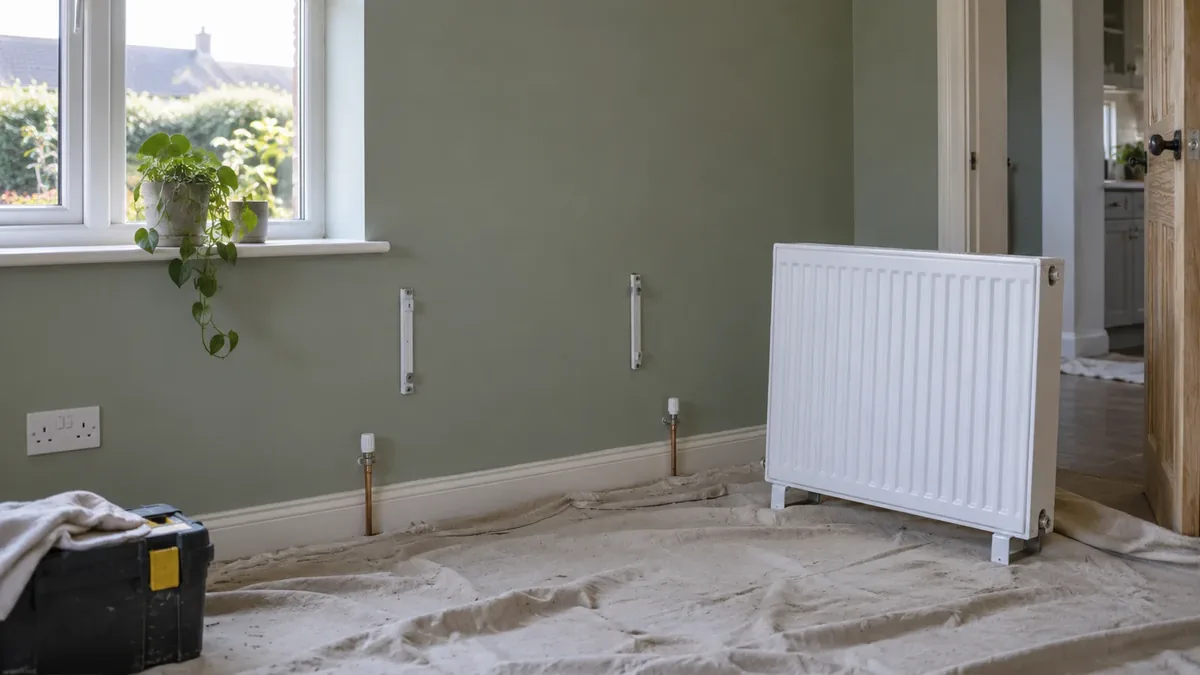
Radiator not heating
A radiator that is cold at the top, cold at the bottom, or cold all over each points to a different fault, and some fixes take five minutes. Working out where the cold is comes before reaching for the phone.
Cold at the top is trapped air, and bleeding usually clears it. Cold at the bottom is sludge that has settled in the panel and needs a flush rather than a bleed. Cold all over, while the rest of the system is warm, points to the thermostatic valve or its pin. If a whole zone stays cold, the problem is more likely a motorised zone valve or thermostat, which is a job for an RGI-registered plumber rather than a DIY fix.
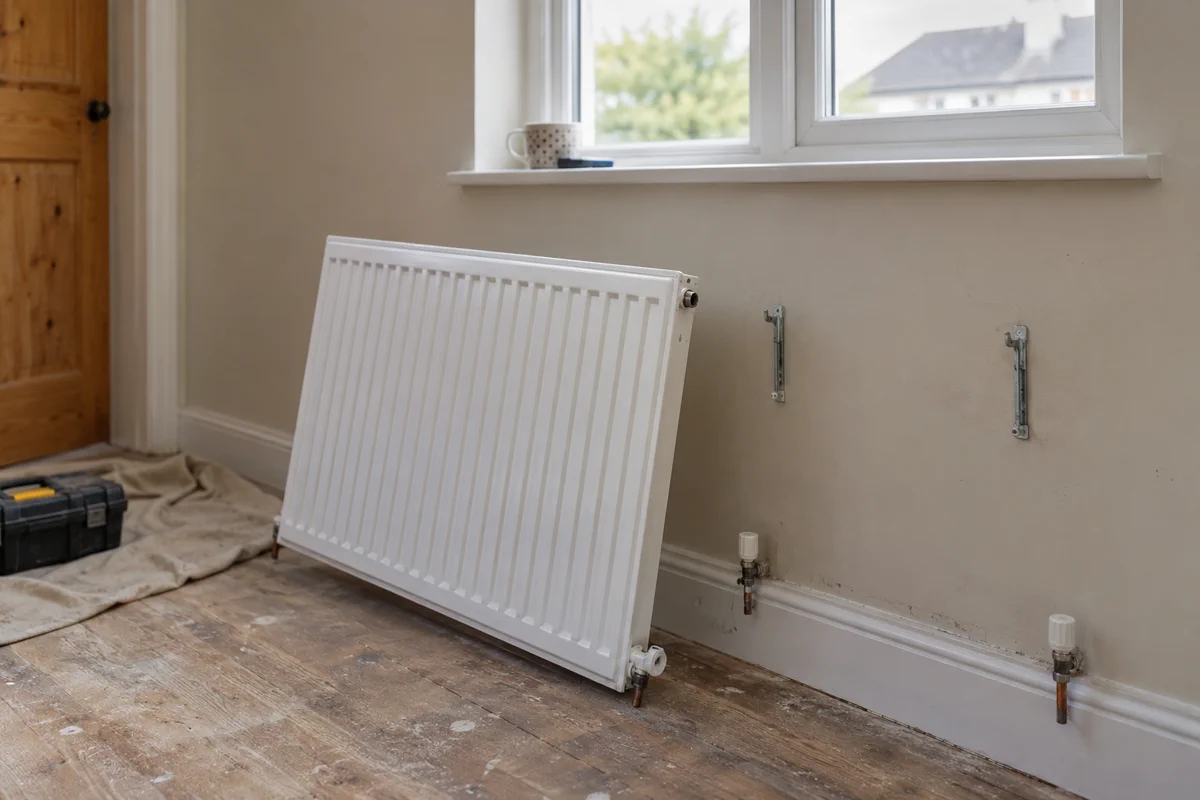
Where is it cold?
How to Diagnose a Cold Radiator
Before you call anyone, work out where the radiator is cold. A radiator that is warm at the bottom but cold at the top has trapped air, and bleeding usually clears it. One that is hot at the top but cold at the bottom has sludge settled in the base. A radiator that is cold all over while the rest of the system works points to the thermostatic valve.
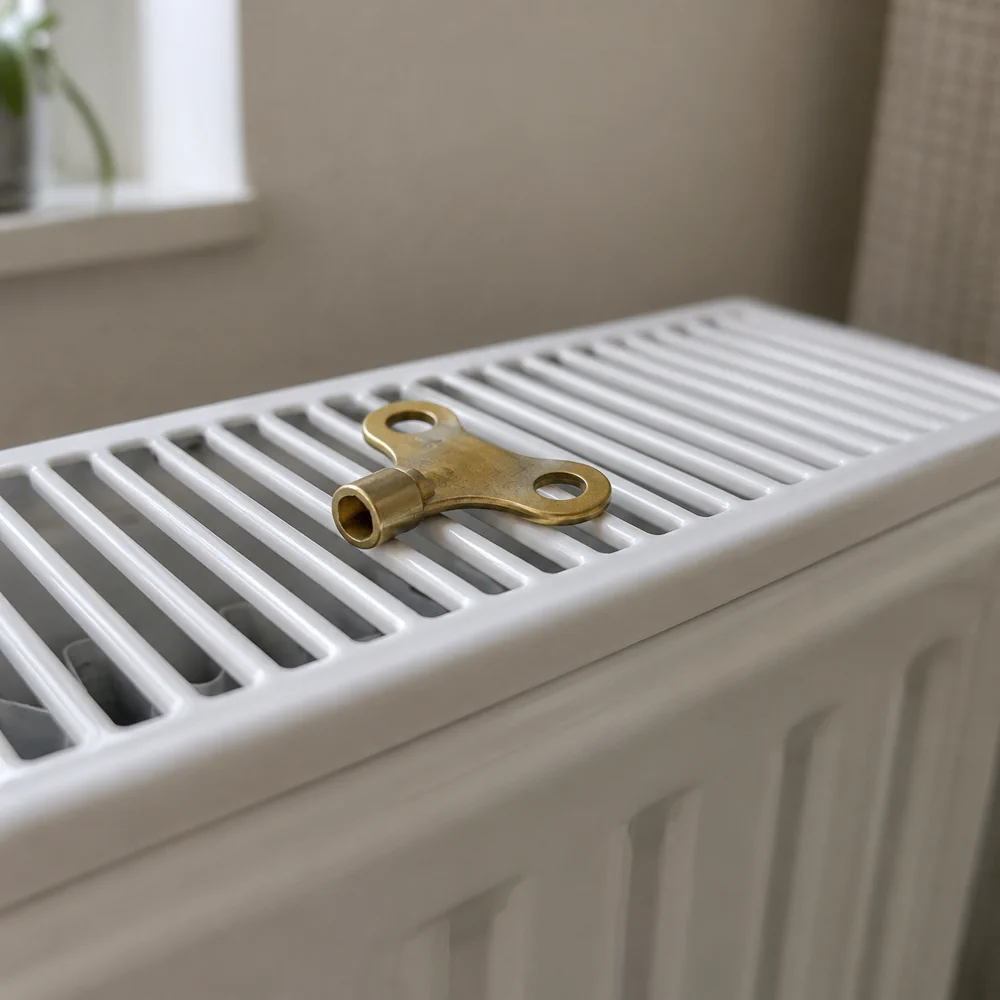
To bleed a radiator, turn the heating on and let the system warm up fully, then turn it off and wait ten minutes. Insert a radiator bleed key into the valve at the top corner and hold a cloth underneath. Turn it anti-clockwise a quarter turn until you hear air hissing, and once water trickles steadily out, close the valve firmly. Check the boiler pressure gauge afterwards and repressurise to 1 to 1.5 bar with the filling loop if needed.
- Cold at the top means trapped air, bleed it
- Cold at the bottom means sludge in the base
- Cold all over usually points to the TRV
- A whole zone cold points to a zone valve
Why it happens
Common Causes of a Cold Radiator
Working out which of these is behind a cold radiator tells you whether it is a five-minute fix or a call to a plumber.
Trapped Air
Cold at the top, warm at the bottom. Air rises to the top of the panel and blocks the hot water. Bleeding the radiator with a key releases it and lets the panel fill fully.
Magnetite Sludge
Cold at the bottom, hot at the top. Iron oxide from internal corrosion settles in the base and blocks flow. It needs a flush, not a bleed.
Seized TRV Pin
Cold all over. The thermostatic valve pin sticks in the closed position, common on radiators left off for a season. Freeing the pin gets the flow moving again.
Failed Zone Valve
A whole zone cold while another works points to a motorised zone valve in the hot press that has stopped opening. A common and straightforward repair.
Poor Circulation
A tired circulating pump or an airlock in the pipework can leave radiators furthest from the boiler slow to warm or fully cold, even when the boiler is firing.
Unbalanced Lockshield
If one radiator hogs the heat while others stay cold, the lockshield valves need balancing. A seized lockshield can starve a radiator of flow entirely.
Typical costs
What Radiator Repairs Cost in 2026
Bleeding a radiator is a free DIY job with a cheap key. The bigger costs come in when the fault is sludge or a failed valve and a plumber is needed.
- A radiator bleed key costs under €2 and the job is DIY
- A full system power flush runs €400 to €700
- A failed zone valve actuator is €150 to €280 to replace
Indicative 2026 ranges. Annual boiler servicing usually includes a basic system check that can catch these issues early.
- Radiator bleed key Under €2
- Full system power flush €400–700
- Zone valve replacement €150–280
- Annual boiler service €80–120
Indicative 2026 ranges. Always confirm with the plumber before work begins.
Cold at the bottom
Sludge and When to Power Flush
A radiator that is hot at the top but cold at the bottom has magnetite sludge settled in the base. This is iron oxide from internal corrosion in the system, and it is dense enough to sink and block the bottom section of the panel. Bleeding will not shift it.
The options are to remove the individual radiator and flush it outdoors with a hose, or to power flush the whole system. A power flush circulates a descaling and sludge-removing solution through the entire heating circuit, typically €400 to €700 for a full system, which is well worth it when several radiators are affected.
Browse by county
Find a Plumber in Your County
Every plumber listed is contactable directly for heating and radiator work, county by county across Ireland.
Leinster
12 countiesDublin and the east, where older housing stock and hard water leave heating systems prone to sludge.
Munster
6 countiesCork, Limerick and the south west, from city terraces to rural homes on oil-fired heating.
Connacht
5 countiesGalway, Mayo and the west, where damp Atlantic winters keep the heating working hard.
Common questions
Radiator Not Heating: Common Questions
Why is my radiator cold at the top?
A radiator that is warm at the bottom but cold at the top has trapped air. Bleeding releases the air and lets hot water fill the whole panel. Turn the heating on and let it warm up, then turn it off, wait ten minutes and use a bleed key on the valve at the top corner until water trickles steadily out.
Why is my radiator cold at the bottom but hot at the top?
That is magnetite sludge, iron oxide from internal corrosion, settled in the base of the panel. Bleeding will not fix it. The options are to remove the radiator and flush it outdoors with a hose, or to power flush the whole system.
My radiator is cold all over, what should I check first?
Check the thermostatic radiator valve, the plastic-headed valve on the side usually marked 1 to 5. If it is set to 0 or turned fully down, turn it up to 3 or 4 and wait twenty minutes. If it stays cold, the valve pin may be seized in the closed position, which is common on radiators turned off for a season.
How do I bleed a radiator?
Turn the heating on and let the system warm up fully, then turn it off and wait ten minutes. Insert a bleed key into the valve at the top corner, hold a cloth underneath, and turn it anti-clockwise a quarter turn until you hear air hissing. Once water trickles steadily out, close the valve, then check the boiler pressure gauge and repressurise to 1 to 1.5 bar if needed.
Why is a whole zone of my house cold?
If one zone, such as all the upstairs radiators, is cold while another works fine, the usual cause is a failed motorised zone valve in the hot press. A faulty room thermostat or programmer for that zone can also be to blame. A zone valve replacement is typically €150 to €280.
When should I call a plumber about a cold radiator?
Call a plumber if bleeding does not fix cold-at-top radiators and the pressure keeps dropping, if several radiators are cold at the bottom, if an entire zone is not heating, or if radiators make persistent banging, gurgling or hissing noises.
Radiator Still Cold? Find a Plumber
If bleeding and balancing have not fixed it, get a heating plumber out. Browse RGI-registered plumbers across Ireland and call them directly.
Find a plumber